
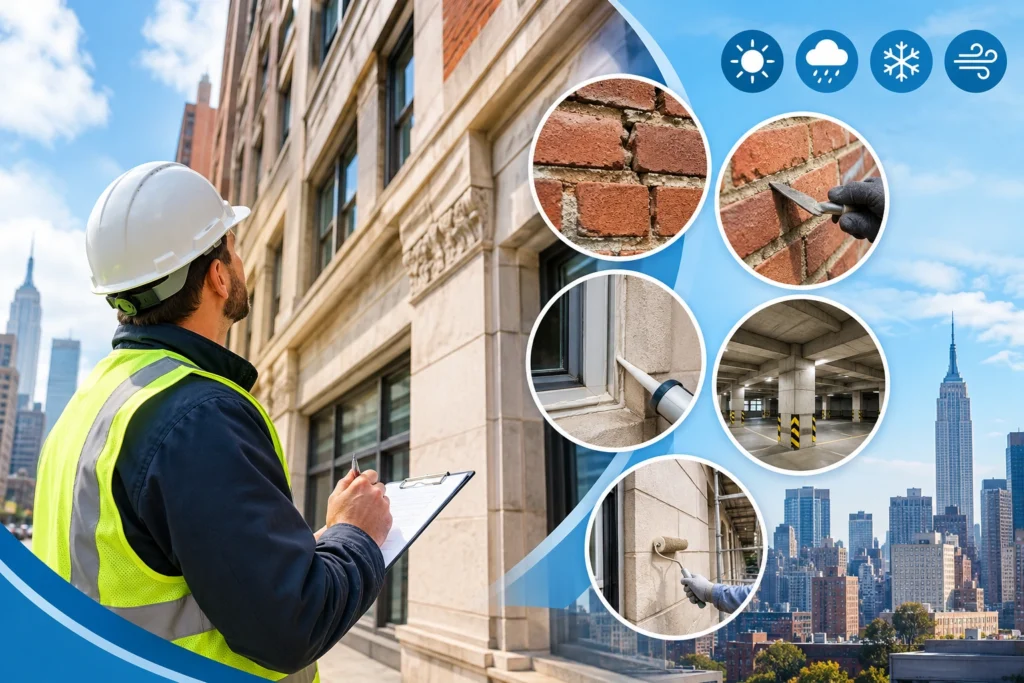
A building’s exterior does more than create a first impression. It protects the structure from rain, wind, temperature changes, and everyday environmental damage. In New York City, where buildings experience harsh winters, humid summers, and frequent changes in weather, maintaining exterior walls is essential for long-term durability.
Over time, brickwork can deteriorate, mortar joints may begin to crumble, and small cracks can develop around windows and other exterior openings. If these problems remain untreated, water can enter the building and gradually damage surrounding materials. What starts as a minor repair may eventually become a more expensive restoration project.
Professional facade restoration helps property owners address these concerns before they become more serious. With the right repair methods, building owners can improve weather resistance, protect exterior materials, and maintain the overall condition of their properties.
For residential buildings, commercial properties, and multi-story structures, working with experienced facade restoration contractors NYC can be an important part of a long-term building maintenance strategy.
Why Building Facades Need Regular Maintenance
New York City has a diverse building landscape, ranging from older brick buildings to modern commercial properties. Although their designs differ, all buildings are exposed to environmental conditions that can gradually affect their exterior surfaces. Rainwater may enter damaged mortar joints, freezing temperatures can worsen existing cracks, and prolonged exposure to sunlight can cause certain sealants to deteriorate. Air pollution and everyday wear can also affect the appearance and condition of exterior materials.
These issues are not always easy to identify from the ground. Some defects develop behind exterior finishes or in areas that are difficult to access without specialized equipment. Regular maintenance helps property owners identify deterioration and determine which repairs are necessary. Depending on the building’s condition, restoration may involve masonry repairs, brick pointing, concrete patching, sealant replacement, or waterproofing improvements. Addressing these problems early can help preserve the building envelope and reduce the likelihood of recurring exterior damage.
How Facade Restoration Contractors NYC Improve Weather Protection
A well-maintained facade acts as a protective barrier between the building’s interior and the outside environment. When parts of that barrier deteriorate, moisture and air can enter through vulnerable areas. Professional restoration focuses on repairing these weaknesses and restoring the performance of exterior materials.
Repairing Cracks Before Water Gets Inside
Small cracks in brickwork, concrete, or other exterior materials can create entry points for water. During periods of heavy rain, moisture may travel through these openings and affect interior walls, ceilings, insulation, or nearby building components.
The appropriate repair depends on the crack’s location, size, and likely cause. Contractors may repair localized damage, replace deteriorated masonry, or recommend further evaluation if movement or structural concerns are suspected. Simply covering a crack without understanding why it developed may not provide a lasting solution. A proper assessment helps determine whether the problem requires a surface repair or more extensive work.
Restoring Weak and Deteriorated Mortar Joints
Mortar joints play an important role in masonry construction. They help hold bricks together and limit the amount of water that can enter through gaps between masonry units. After years of exposure to moisture, temperature changes, and pollution, mortar may become loose, cracked, or powdery. Damaged joints can leave brickwork more vulnerable to water infiltration and further deterioration.
Brick pointing, also called repointing, involves removing deteriorated mortar and replacing it with suitable new material. When the work is carried out correctly, it helps restore the joints and improve the wall’s resistance to moisture. For older buildings, selecting compatible mortar is especially important. Materials that are too hard or otherwise unsuitable for the existing masonry can contribute to additional damage.
Improving Waterproofing Around Vulnerable Areas
Water does not always enter through obvious cracks. It can also find its way through window perimeters, exterior joints, failed flashing, and connections between different building materials. During restoration, contractors examine these areas to identify potential sources of moisture. Depending on the findings, repairs may include replacing failed sealants, correcting flashing problems, repairing joints, or applying an appropriate waterproofing system.
The goal is to address the actual route through which water enters rather than relying on temporary fixes. Effective moisture control can help protect interior finishes and reduce the risk of damage to building components. However, the correct solution depends on the building’s construction and the source of the water intrusion.
Replacing Damaged Sealants and Flashing
Sealants are commonly installed around windows, doors, expansion joints, and other exterior openings. They help accommodate normal movement while limiting the entry of water and air. Over time, sealants can lose adhesion, shrink, or develop gaps. Flashing may also become damaged or fail to direct water away from vulnerable parts of the building.
Restoration work may involve removing failed sealants, preparing the affected surfaces, and installing compatible replacement materials. Damaged flashing may need repair or replacement to restore proper drainage. These details are easy to overlook, but they can make a significant difference in how well a building handles heavy rainfall and seasonal weather changes.
Addressing Damage Caused by Winter Weather
Winter conditions can place considerable stress on exterior masonry and concrete. When water enters porous materials or small openings and freezes, it expands. Repeated freezing and thawing can gradually widen cracks, loosen mortar, and damage exposed surfaces. Restoration helps reduce the conditions that contribute to this deterioration. Repairing defective joints, replacing damaged masonry, and correcting water entry points can limit moisture exposure before colder weather returns.
While no restoration project can eliminate all weather-related wear, maintaining the facade can help reduce avoidable damage over time.
Other Benefits of Professional Facade Restoration
Weather protection is a major reason to maintain a building’s exterior, but restoration can also support several other aspects of property management.
Protecting Exterior Materials and Building Components
When moisture repeatedly enters a building envelope, it can affect more than the visible exterior surface. Depending on the construction, water may damage insulation, interior finishes, metal components, and other materials.
Timely restoration helps preserve the protective function of the facade. If contractors identify signs of more serious deterioration, further investigation may be necessary to determine the extent of the damage.
Reducing Repeat Repairs
A recurring leak can be frustrating for property owners and building managers, especially when previous repairs have not solved the problem. Repeatedly repairing interior stains or applying sealant without investigating the source may only provide temporary relief. A more effective approach is to identify the underlying defect and select a repair method suited to the affected material.
Although restoration requires an upfront investment, addressing the actual cause of deterioration can help reduce unnecessary repeat work.
Supporting Indoor Comfort
Gaps around windows, damaged seals, and defects in the building envelope may contribute to unwanted air movement and moisture problems. These conditions can affect indoor comfort and, in some cases, heating and cooling performance.
Repairing exterior openings and restoring failed seals can help improve the building envelope’s performance. The overall energy impact will depend on factors such as insulation, ventilation, window condition, and the building’s design.
Maintaining the Building’s Appearance
Cracked brickwork, missing mortar, concrete deterioration, and water stains can make a property look poorly maintained. For commercial buildings, these visible problems may also affect how tenants, visitors, and prospective clients perceive the property.
Facade restoration helps repair damaged surfaces and maintain a more consistent exterior appearance. When combined with regular maintenance, it can help preserve the property’s character and long-term condition.
The Importance of Inspecting a Building Before Restoration
Every building has different maintenance requirements. The most suitable restoration plan depends on the type of exterior materials, the age of the structure, the location of the damage, and the conditions that caused it. Before work begins, a professional assessment can help establish the extent of deterioration and identify areas that need attention.
An assessment may examine:
- Cracks in masonry, concrete, and exterior finishes.
- Missing, loose, or deteriorated mortar.
- Water stains, efflorescence, and signs of moisture penetration.
- Failed sealants around windows and exterior joints.
- Damaged flashing and areas where water may collect.
- Loose bricks, spalling concrete, or other potentially unsafe materials.
- Conditions that may require additional structural evaluation.
The results can help property owners prioritize repairs according to their urgency and scope. Some buildings may need localized maintenance, while others may require more extensive restoration.
For properties subject to New York City’s Facade Inspection Safety Program (FISP), owners should also ensure that required inspections and reports are handled by appropriately qualified professionals.
How Parking Structure Inspection Supports Property Maintenance
Buildings with parking garages or elevated parking decks may require additional attention beyond their exterior walls. These structures often contain concrete slabs, beams, columns, joints, and drainage systems that can deteriorate when exposed to water and environmental conditions.
A professional parking structure inspection helps identify visible signs of deterioration and determine whether further evaluation or repairs are needed.
Depending on the facility, inspectors may look for:
- Cracks and spalling in concrete surfaces.
- Signs of corrosion affecting reinforcing steel.
- Deteriorated expansion joints and sealants.
- Water infiltration and drainage problems.
- Damage to concrete beams, columns, slabs, or other structural components.
Facade restoration and parking facility maintenance address different building elements, but moisture management is important to both. For example, a property may have deteriorated facade joints and water-related damage in its parking structure. Identifying these concerns allows the owner to plan appropriate work for each area. Combining maintenance planning across a property can help building managers track defects, prioritize repairs, and make better use of their maintenance budgets.
However, facade restoration should not be treated as a replacement for a dedicated parking structure assessment. Each component needs to be evaluated according to its condition, construction, and applicable inspection requirements.
Warning Signs That Your Building May Need Restoration
Exterior deterioration often develops gradually. Recognizing the early signs can help property owners arrange an assessment before the damage becomes more extensive.
Watch for these common warning signs:
- Cracked masonry: New or widening cracks may indicate material deterioration or movement that needs investigation.
- Crumbling mortar: Missing or deteriorated mortar can leave joints vulnerable to moisture.
- Recurring water leaks: Repeated leaks near windows, ceilings, or exterior walls may indicate unresolved building envelope problems.
- Loose bricks or concrete: Unstable exterior materials can create safety risks and require prompt professional attention.
- Damaged sealants: Gaps around windows and joints may allow rainwater to enter.
- White deposits on brickwork: Efflorescence can indicate that moisture is moving through masonry and leaving mineral deposits behind.
- Peeling exterior coatings: Deteriorating finishes may be associated with moisture exposure or surface failure.
These signs do not automatically mean that a building has a serious structural problem. However, they should be investigated to determine the appropriate response. Loose or falling materials require particular attention because they may endanger pedestrians or occupants.
Choosing the Right Facade Restoration Contractor in NYC
The quality of restoration work depends on more than the visible finish. Proper material selection, surface preparation, repair techniques, and moisture management all influence the long-term result.
When comparing contractors, property owners should consider several factors.
Experience With Similar Buildings
Look for a contractor familiar with the building’s construction type and the problems affecting its exterior. Experience with masonry restoration, brick pointing, concrete repairs, and waterproofing can be valuable for properties with multiple exterior materials.
A Clear Scope of Work
A professional proposal should explain the identified problems, the recommended repairs, and the expected scope of work. Property owners should understand which issues require immediate attention and whether additional investigation may be needed.
Appropriate Repair Materials
Different masonry and concrete systems require different repair approaches. Mortar, sealants, coatings, and waterproofing materials should be compatible with the existing construction and suitable for the conditions in which they will be used.
Safety and Regulatory Awareness
Facade work may require scaffolding, suspended access equipment, sidewalk protection, and other safety measures. Before hiring a contractor, confirm that the company understands applicable safety requirements and the permits or approvals relevant to the project.
Where FISP requirements apply, property owners should coordinate with the qualified professionals responsible for inspections, reports, and compliance-related recommendations.
Communication and Project Management
Exterior restoration can affect building occupants, tenants, neighboring properties, and pedestrian access. A clear project plan should explain scheduling, access arrangements, safety precautions, and anticipated disruptions.
Good communication helps owners understand how the work will proceed and makes it easier to coordinate restoration with other building maintenance activities.
Why Proactive Facade Maintenance Is a Smart Investment
Waiting until exterior damage becomes obvious can limit repair options and increase the amount of work required. Regular assessments allow property owners to identify deterioration earlier and plan repairs before defects spread.
A practical maintenance program may include periodic visual checks, professional inspections when appropriate, prompt investigation of water leaks, and records of completed repairs. Owners should also follow any applicable inspection schedules and address identified safety concerns without unnecessary delay.
The right maintenance schedule depends on the property’s age, materials, exposure, and previous repair history. A tailored approach helps owners understand their building’s needs and allocate resources more effectively.
Most importantly, restoration should address the reason the damage occurred. Repairing the visible defect without correcting the underlying moisture problem may lead to the same issue returning.
Protect Your Property With Reliance Group NYC
Maintaining a building’s exterior requires attention to detail and a clear understanding of how different materials respond to weather and moisture. From deteriorated mortar joints to damaged concrete and recurring water infiltration, timely repairs can help protect the building envelope and support long-term property maintenance.
Reliance Group NYC helps property owners address building exterior and restoration needs through practical repair and maintenance solutions. A careful assessment of the property’s condition can help determine which areas need attention and what work may be appropriate. Whether you are dealing with damaged masonry, deteriorating exterior joints, or water penetration, taking action early can help prevent avoidable deterioration and support the long-term condition of your building.
Contact Reliance Group NYC to discuss your property’s exterior maintenance needs and explore suitable restoration options.
Frequently Asked Questions
1. What services do facade restoration contractors provide?
Facade restoration contractors may provide masonry repairs, brick pointing, concrete restoration, crack repairs, sealant replacement, and waterproofing improvements. The exact services depend on the building’s condition and construction.
2. How does facade restoration improve weather resistance?
Restoration repairs defects that allow rainwater and moisture to enter the building. By correcting damaged joints, cracks, sealants, and other vulnerable areas, contractors help improve the exterior’s ability to withstand changing weather conditions.
3. How can I tell if my building needs facade restoration?
Common warning signs include cracked bricks, crumbling mortar, loose masonry, recurring leaks, damaged sealants, and deteriorating concrete. A professional assessment can help determine the cause and appropriate repair method.
4. Can facade restoration stop recurring water leaks?
It can help when the source of the leak is correctly identified and repaired. The solution may involve masonry repairs, replacement sealants, flashing corrections, or other waterproofing measures, depending on where the water enters.
5. What is the purpose of a parking structure inspection?
A parking structure inspection helps identify deterioration in concrete, joints, drainage systems, and other components of a parking facility. It can help property owners determine whether maintenance, repairs, or further structural evaluation is necessary.
6. How often should a building facade be inspected?
The appropriate inspection schedule depends on the building’s condition, materials, maintenance history, and applicable requirements. Buildings in New York City subject to FISP must follow the relevant inspection and reporting rules.
7. Does facade restoration increase property value?
Well-maintained building exteriors can improve appearance, reduce avoidable deterioration, and support long-term property care. The effect on market value depends on several factors, including location, building condition, and local market conditions.