
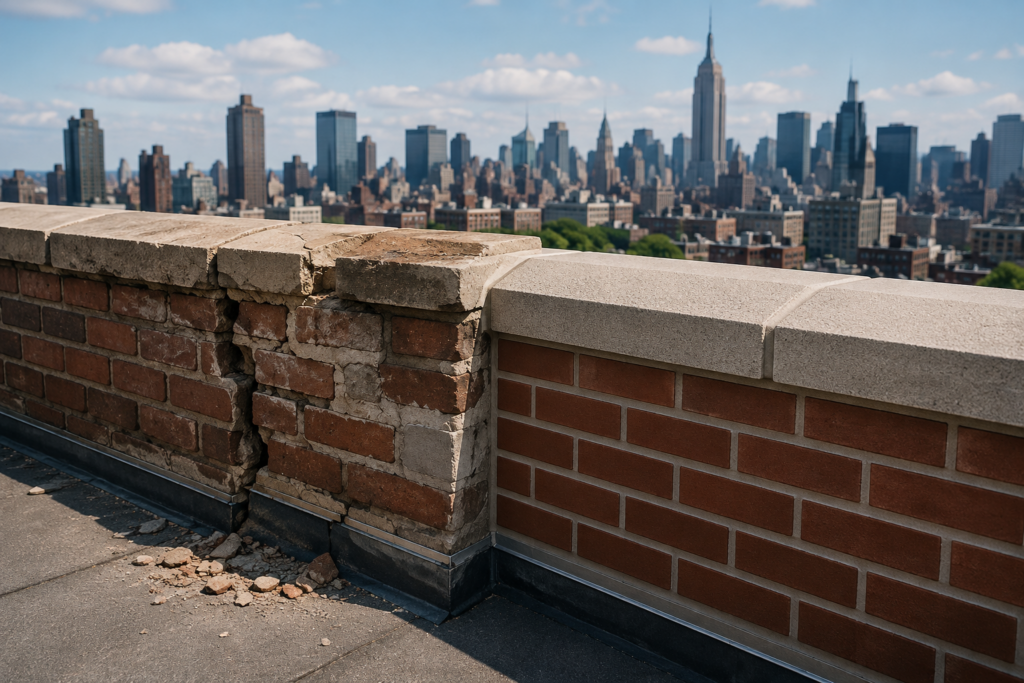
Parapet walls are an important part of many residential, commercial, and historic buildings across New York City. These walls extend above the roofline and help protect the building structure while also contributing to its appearance. However, because parapet walls are constantly exposed to outdoor conditions, they can experience significant wear over time.
From heavy rain and snow to freezing temperatures, strong winds, and summer heat, NYC weather can gradually damage brick, mortar, coping stones, and other parapet wall components. Property owners who understand these weather-related risks can identify problems earlier and arrange professional Building Parapet Wall Repair NYC services before minor damage turns into a larger structural issue.
At Reliance Group NYC, we understand the challenges that New York City buildings face throughout the year. This guide explains how different weather conditions affect parapet walls and why regular inspection and timely repairs are essential.
What Is a Parapet Wall?
A parapet wall is a low protective wall that extends above the edge of a building’s roof. It is commonly found on apartment buildings, commercial properties, brownstones, and other structures throughout NYC.
Parapet walls can serve several purposes, including:
- Providing protection around roof edges
- Supporting the overall building design
- Helping improve safety
- Concealing rooftop equipment
- Adding architectural character
Since the parapet sits above the main roofline, it receives direct exposure to rain, snow, sunlight, wind, and temperature changes. Over many years, this constant exposure can cause the materials to weaken.
Heavy Rain Can Cause Water Damage
Rain is one of the most common causes of parapet wall deterioration. Brick and mortar are durable materials, but they can absorb moisture when cracks, gaps, or damaged joints are present.
Water can enter through:
- Cracked mortar joints
- Damaged bricks
- Missing or loose coping stones
- Gaps around flashing
- Failed waterproofing materials
Once water enters the wall, it may travel deeper into the masonry. Over time, this moisture can weaken mortar, cause brick deterioration, and create more visible cracks.
In a city like New York, where buildings experience frequent rain throughout the year, proper maintenance is important. Small cracks should not be ignored because they can allow water to enter the parapet and cause more extensive damage.
Freeze and Thaw Cycles Can Crack Masonry
NYC winters can be particularly challenging for parapet walls. During cold weather, water that has entered small cracks or pores in the masonry can freeze.
When water freezes, it expands. This expansion puts pressure on the surrounding brick and mortar. As temperatures rise, the ice melts. If this process continues repeatedly, the masonry may gradually crack, loosen, or break apart.
This is known as the freeze-thaw cycle.
Common signs of freeze-thaw damage include:
- Cracked bricks
- Spalling or flaking brick surfaces
- Loose mortar
- Widening cracks
- Pieces of masonry falling away
- Damaged coping stones
Ignoring these signs can lead to more serious deterioration. Regular inspections before and after winter can help building owners identify weather-related damage early.
Snow and Ice Can Increase Moisture Exposure
Snow may appear harmless when it accumulates on or around a building, but melting snow can create moisture problems for parapet walls.
As snow melts, water can seep into existing cracks and damaged mortar joints. If temperatures drop again, the water can freeze and expand inside the masonry.
Ice can also create problems around coping stones and other areas where water drainage is poor. Repeated exposure to snow, melting water, and freezing temperatures can weaken the parapet over time.
For this reason, damaged masonry should be repaired before winter whenever possible. Preventive maintenance can reduce the risk of water entering vulnerable areas during snow and freezing conditions.
Strong Winds Can Loosen Damaged Materials
New York City buildings can experience strong winds, especially during storms and severe weather. A structurally sound parapet wall is designed to withstand normal weather conditions, but existing damage can make the wall more vulnerable.
Strong winds may affect:
- Loose bricks
- Damaged coping stones
- Weak mortar joints
- Deteriorating masonry
- Previously cracked sections
Wind pressure can worsen existing weaknesses and increase the risk of materials becoming loose. This can create a safety concern, particularly on taller buildings where falling masonry may endanger people below.
Professional inspections can identify loose or unstable sections before they become more dangerous. If repairs are needed, timely action can help protect both the building and the people around it.
Summer Heat Can Cause Material Expansion
Extreme cold is not the only weather condition that affects masonry. NYC summers can also expose parapet walls to high temperatures and direct sunlight.
Brick, metal, stone, and other building materials can expand when heated. When temperatures drop, they contract again. Over many years, repeated expansion and contraction can place stress on joints and surrounding materials.
This may contribute to:
- Small cracks
- Deteriorating sealants
- Separation around joints
- Damage to coping materials
- Weakening of older mortar
Temperature changes can be especially problematic for older buildings with masonry that has already experienced decades of weather exposure. Regular maintenance helps ensure that small weather-related changes do not develop into major repair needs.
Humidity Can Affect Older Parapet Walls
Humidity can increase the amount of moisture present in masonry materials. Older brick walls are often more vulnerable when mortar joints have weakened or protective surfaces have deteriorated.
Excess moisture may contribute to issues such as:
- Mortar deterioration
- Efflorescence
- Mold or moisture concerns in nearby areas
- Brick surface damage
- Increased risk during freezing weather
Efflorescence, which appears as a white powdery substance on masonry, can indicate that moisture is moving through the wall and leaving mineral deposits behind.
While the appearance of efflorescence does not always mean there is severe structural damage, it should be evaluated alongside other signs of water intrusion.
Storms Can Expose Existing Parapet Wall Problems
Heavy storms often reveal problems that were already developing. A parapet wall with minor cracks, loose mortar, or poor waterproofing may appear stable during dry weather. However, heavy rain and strong winds can expose these weaknesses.
After a major storm, building owners should check for visible signs such as:
- New cracks
- Missing mortar
- Loose or damaged bricks
- Water stains
- Damaged coping
- Debris around the base of the building
- Signs of masonry movement
Prompt inspection after severe weather can help prevent further deterioration. In many cases, early repairs are more manageable than waiting until extensive masonry restoration becomes necessary.
How Weather Damage Leads to Parapet Wall Deterioration
Weather damage often develops gradually. A small crack may allow water inside the wall. That water can freeze during winter, causing the crack to expand. Additional rain can then enter the larger opening.
Over time, this cycle can lead to:
- Small cracks in mortar or brick
- Water penetration
- Freeze-thaw expansion
- Widening cracks
- Loose masonry
- More serious structural concerns
This is why regular maintenance is so important. Addressing small problems early can help reduce the risk of extensive damage.
Signs Your NYC Parapet Wall May Need Repair
Property owners should watch for visible warning signs throughout the year. You may need professional parapet wall repair if you notice:
Cracked or Missing Mortar
Mortar joints play an important role in keeping masonry secure. Cracked, loose, or missing mortar may allow water to enter and can weaken the wall over time.
Damaged or Spalling Bricks
Bricks that are flaking, chipping, cracking, or breaking apart may have experienced moisture and freeze-thaw damage.
Loose Coping Stones
Coping stones help protect the top of a parapet wall. If they become loose or damaged, water may enter the masonry below.
Visible Cracks
Cracks should always be monitored, especially if they become wider or longer over time.
Water Stains
Water stains near the parapet, roofline, or interior walls may indicate moisture penetration.
Leaning or Bulging Areas
Any visible movement, leaning, or bulging in a parapet wall should be evaluated by a qualified professional as soon as possible.
Why Timely Building Parapet Wall Repair NYC Is Important
Delaying parapet wall repairs can allow weather-related damage to continue. What begins as a small mortar issue may eventually affect larger sections of the wall.
Timely Building Parapet Wall Repair NYC can help:
- Prevent additional water intrusion
- Repair damaged mortar joints
- Replace deteriorated bricks
- Improve the stability of the parapet
- Address loose coping materials
- Help maintain the building’s appearance
- Reduce the risk of more extensive repairs later
For NYC property owners, proactive maintenance is often the best approach. Regular inspections and repairs can help protect masonry from the effects of changing weather conditions.
Professional Parapet Wall Maintenance for NYC Buildings
Different buildings have different repair needs. The age of the property, type of masonry, previous repairs, and level of weather exposure can all affect the condition of a parapet wall.
A professional assessment can help identify issues such as water penetration, deteriorated mortar, damaged bricks, and loose materials. Depending on the condition of the wall, repairs may involve masonry restoration, repointing, brick replacement, waterproofing, or coping repairs. The goal is not simply to improve appearance. Proper parapet wall maintenance helps protect the building from continued weather exposure and potential deterioration.
Protect Your Building from NYC Weather
New York City’s changing weather can place constant stress on parapet walls. Rain can introduce moisture, freezing temperatures can expand cracks, snow can increase water exposure, wind can affect loose materials, and summer heat can cause repeated expansion and contraction.
Because these problems often develop slowly, regular inspections are essential. Catching damage early can help protect your property and prevent small masonry issues from becoming more serious. If you notice cracked bricks, deteriorating mortar, loose coping, or other signs of weather damage, Reliance Group NYC can help assess your building’s parapet wall and recommend the appropriate repair solution.
Final Thoughts
Parapet walls are exposed to some of the harshest weather conditions a building experiences. In NYC, year-round rain, snow, freezing temperatures, wind, and heat can all contribute to masonry deterioration.
Regular maintenance and timely building parapet wall repair NYC services can help protect your property, improve safety, and extend the life of your parapet wall. By addressing small signs of damage before they worsen, building owners can better prepare their properties for New York City’s changing weather conditions.
Contact Reliance Group NYC today to discuss your parapet wall repair and masonry maintenance needs.