
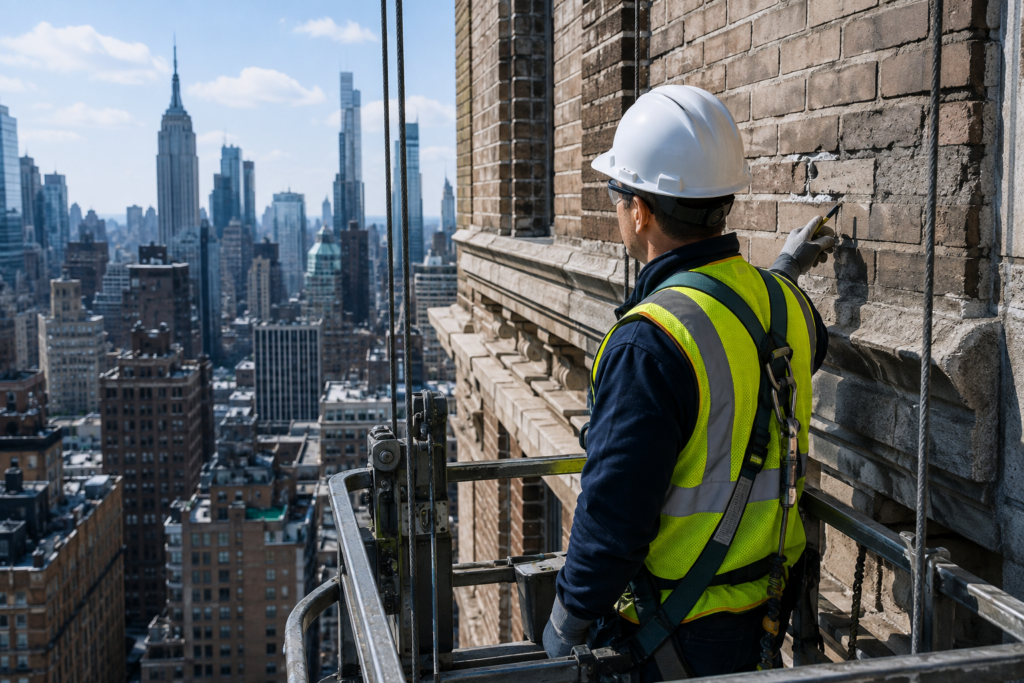
A building facade protects the property from weather, moisture, and other external conditions. Over time, exposure to rain, snow, wind, temperature changes, and pollution can cause exterior materials to deteriorate. Cracks, loose bricks, damaged mortar, and water infiltration can become serious concerns if property owners ignore them.
A Facade Inspection Safety Program provides a structured way to identify facade problems, assess potential hazards, and plan necessary maintenance or repairs. For building owners in New York City, regular facade inspections can play an important role in maintaining safer properties and addressing exterior deterioration before it becomes more difficult to manage.
What Is a Facade Inspection Safety Program?
A Facade Inspection Safety Program is a planned process for monitoring the condition and safety of a building’s exterior. It involves professional inspections, identification of facade defects, documentation of findings, and appropriate repair or maintenance work.
Depending on the building, a facade inspection may cover:
- Brick and masonry walls
- Concrete surfaces
- Stone facade elements
- Mortar joints
- Parapet walls
- Balconies
- Copings and exterior details
- Exterior attachments
- Areas showing water damage
- Other accessible facade components
The purpose is not simply to improve the building’s appearance. A professional inspection helps identify conditions that may affect public safety, building performance, and long-term property maintenance.
Why Is a Facade Inspection Safety Program Important?
Exterior building problems can develop gradually. A small crack or deteriorated mortar joint may appear harmless, but continued exposure to moisture and changing temperatures can make the condition worse.
A professional facade inspection safety program helps property owners take a proactive approach rather than waiting for visible damage to become an emergency.
1. Helps Identify Facade Defects Early
Regular inspections can uncover cracks, loose masonry, spalling concrete, deteriorated joints, and other exterior problems. Finding these issues early gives building owners more time to plan appropriate repairs.
2. Helps Reduce Falling Material Risks
Loose bricks, stones, concrete pieces, or other facade materials can become dangerous when they detach from a building. An inspection can help identify areas that require further evaluation, stabilization, or repair. Property owners can then take appropriate safety measures based on professional recommendations.
3. Supports Preventive Building Maintenance
Preventive maintenance is usually easier to manage than unexpected emergency repairs. A regular facade inspection schedule gives property owners useful information about the condition of exterior materials. This information can help them prioritize repairs and plan future maintenance.
4. Helps Protect Against Water Damage
Water is one of the major causes of facade deterioration. Cracks, failed joints, damaged coping, and other openings can allow moisture to enter exterior wall systems. Over time, moisture can contribute to masonry deterioration, corrosion, staining, and interior damage.
A professional facade inspection can help identify visible signs of water infiltration and areas that may require repair.
Common Problems Found During Facade Inspections
A building facade can experience different types of deterioration depending on its age, materials, location, and maintenance history.
Cracked Masonry
Cracks can appear in bricks, concrete, stone, and other exterior materials. Their size, location, and pattern can help professionals determine the possible cause and severity.
Deteriorated Mortar Joints
Mortar joints can deteriorate because of weather exposure, age, moisture, and improper previous repairs. Damaged joints may require repointing or other masonry repairs.
Loose or Displaced Bricks
Bricks can become loose or displaced over time. These conditions should receive professional attention because loose exterior materials can create safety concerns.
Concrete Spalling
Concrete may crack or break away from the surface, exposing reinforcement in some cases. Spalling should be professionally evaluated to determine the appropriate repair method.
Parapet Deterioration
Parapet walls are exposed to weather and moisture throughout the year. Cracks, deteriorated mortar, loose masonry, and damaged coping can affect their condition.
Water Infiltration
Water entering through facade cracks, joints, flashing, or other openings can contribute to long-term deterioration. Identifying the source is an important part of effective facade maintenance.
Facade Inspection Safety Program for NYC Buildings
New York City buildings experience demanding environmental conditions throughout the year. Freezing temperatures, rain, snow, strong winds, summer heat, and daily temperature changes can affect exterior building materials.
Older buildings may require particular attention because their facade materials and previous repairs can vary significantly.
For NYC property owners, a Facade Inspection Safety Program can provide a systematic approach to monitoring exterior conditions and addressing potential safety concerns.
Property owners should also understand the inspection and maintenance requirements that apply to their specific buildings. NYC facade regulations can change, so owners should consult current city requirements and qualified professionals when planning inspections or repairs.
How Often Should a Building Facade Be Inspected?
There is no single inspection schedule that applies to every building. The appropriate frequency can depend on the property’s age, construction, facade materials, previous repair history, exposure, and applicable local requirements.
An inspection may also be appropriate when property owners notice visible warning signs, such as:
- New cracks
- Loose bricks
- Falling debris
- Damaged mortar
- Bulging masonry
- Water stains
- Concrete spalling
- Damaged parapet walls
- Rust or exposed metal
- Visible facade movement
If you notice any of these conditions, do not ignore them. A professional assessment can help determine whether repair or additional investigation is necessary.
Benefits of a Professional Facade Inspection
Hiring qualified professionals for facade inspections can provide several important benefits.
Improved Safety
Professional inspections can identify visible conditions that may pose risks to occupants, pedestrians, or surrounding property.
Better Repair Planning
Inspection findings can help property owners understand which facade problems require attention and prioritize their maintenance needs.
Reduced Long-Term Damage
Addressing deterioration at an early stage can help prevent some problems from becoming more extensive.
Improved Property Maintenance
A documented inspection and maintenance approach gives property owners a clearer understanding of their building’s exterior condition.
Better Protection of Property Value
Regular maintenance can help preserve the appearance and overall condition of a building while reducing the risk of neglected exterior deterioration.
When Should You Contact a Facade Contractor?
Property owners should consider contacting a professional when they notice significant changes in the building exterior or when an inspection identifies conditions requiring repair.
Professional facade contractors can help with services such as:
- Facade restoration
- Masonry repair
- Brick pointing
- Repointing
- Concrete repair
- Parapet wall repair
- Waterproofing
- Exterior maintenance
- Facade rehabilitation
The right repair depends on the cause and severity of the facade problem. A professional evaluation can help determine the most suitable approach.
Why Choose Reliance Group NYC?
Reliance Group NYC provides professional construction and facade-related services for property owners who need reliable solutions for exterior building concerns.
A well-maintained facade requires more than occasional visual checks. Property owners need a proactive approach that combines inspections, maintenance, timely repairs, and attention to potential safety hazards.
Whether you are dealing with deteriorated masonry, facade damage, parapet issues, or other exterior concerns, professional assistance can help you make informed decisions about your property.
If you are planning a facade inspection or need to address exterior building deterioration, contact Reliance Group NYC to discuss your building’s facade inspection and repair needs.
Frequently Asked Questions About Facade Inspection Safety Programs
What is the purpose of a facade inspection?
The purpose of a facade inspection is to identify visible deterioration, unsafe conditions, and other exterior problems that may require maintenance, repair, or further professional evaluation.
What does a facade inspection include?
Depending on the building, an inspection may review masonry, brickwork, concrete, stone, mortar joints, parapets, balconies, coping, and other exterior components.
Why are facade inspections important in NYC?
NYC buildings face year-round exposure to weather and environmental conditions. Regular inspections can help property owners identify deterioration and address potential facade safety concerns.
Can a facade inspection prevent building damage?
An inspection cannot guarantee that future damage will not occur. However, identifying deterioration early can help property owners take timely action and maintain the building more effectively.
Who should perform a facade inspection?
Facade inspections should be performed by appropriately qualified professionals who understand building exterior systems, facade conditions, and applicable local requirements.
Final Thoughts
A Facade Inspection Safety Program gives building owners a proactive way to monitor exterior conditions and respond to potential problems. Regular inspections can help identify deteriorated masonry, cracks, loose materials, water infiltration, parapet problems, and other facade concerns.
For NYC property owners, maintaining a building facade is an important part of responsible property management. Instead of waiting for a facade problem to become an emergency, schedule professional inspections and address identified issues promptly.
Reliance Group NYC can help property owners with facade-related construction, restoration, and repair needs. Contact the team today to learn more about maintaining a safe and durable building exterior.