

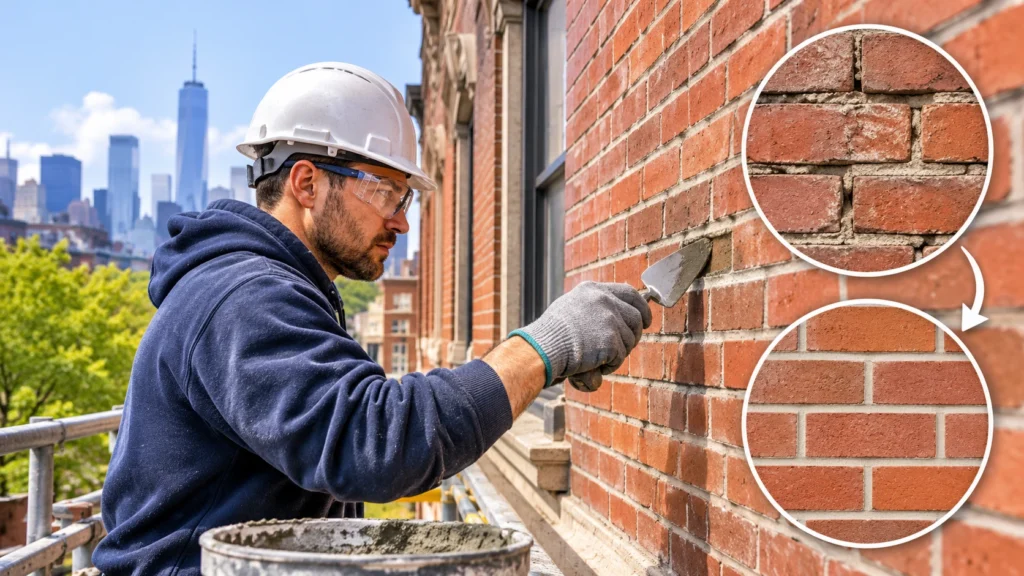
Brick buildings are an important part of New York City’s character. From historic brownstones and residential properties to large commercial buildings, brick exteriors have been used for generations because of their strength, durability, and timeless appearance. However, even well-built masonry structures need maintenance as they age.
One of the most common problems property owners eventually face is deteriorating mortar. The material between bricks can weaken because of rain, snow, freezing temperatures, humidity, and years of exposure to the elements. When mortar starts cracking or falling out, the entire wall can become more vulnerable to moisture and further deterioration.
This is where brick pointing becomes important. For property owners considering exterior masonry repairs, understanding Brick Pointing Costs NYC is an important part of planning the work. While some buildings may only need a few damaged joints repaired, others require extensive restoration across multiple walls. The overall expense depends on the condition of the brickwork, the amount of mortar that needs replacing, building accessibility, and the type of materials used.
Before arranging repairs, it helps to understand what the process involves, what influences the price, and how to choose the right contractor.
What is Brick Pointing and When Does a Building Need It?
Brick pointing is the process of removing old, damaged mortar from the joints between bricks and replacing it with fresh mortar. Although it may appear to be a small repair, it plays an important role in maintaining the strength and weather resistance of a masonry wall. Mortar joints do more than hold bricks together. They also help prevent moisture from entering the wall and protect the surrounding masonry from environmental exposure.
In New York City, buildings experience changing weather conditions throughout the year. Heavy rain, winter freezing, snow, and summer heat can gradually affect mortar joints. Over time, the material may become loose, cracked, or noticeably recessed.
Some common situations where pointing may be necessary include:
- Mortar falling out from between bricks.
- Small gaps appearing along exterior walls.
- Cracked or weakened mortar joints.
- Water entering through deteriorated masonry joints.
- Older buildings showing signs of general mortar deterioration.
- Exterior walls that have not received proper masonry maintenance for years.
Recognizing these problems early can help property owners avoid more extensive repairs later.
Brick Pointing Costs in NYC
There is no single price for every brick pointing project. A small repair around a window is very different from restoring the mortar joints across the exterior of a multi-story commercial building.
As a general 2026 budgeting guideline, standard brick repointing may cost approximately $12 to $30 per square foot. However, difficult access, specialized mortar, historic restoration requirements, and additional masonry damage can increase the total expense.
Here is a general breakdown to help property owners understand possible project costs:
| Type of Repair | Approximate Cost |
|---|---|
| Minor localized mortar repairs | $250–$1,500 |
| Standard brick repointing | $12–$30 per sq. ft. |
| Partial exterior wall restoration | $5,000–$15,000 |
| Larger facade repointing projects | $18,000–$40,000+ |
These figures are general planning estimates rather than guaranteed NYC market rates or contractor quotations. Actual costs depend on the property, repair specifications, labor, and site conditions. For an accurate estimate, the condition of the existing masonry should be assessed before work begins.
What Determines the Cost of Brick Pointing?
When property owners receive different estimates for the same type of masonry work, they often wonder why the prices are not identical. The reason is that every building has its own repair requirements.
Here are the main factors that influence the final project cost.
1. The Overall Condition of the Brickwork
The condition of the existing mortar is usually one of the first things a contractor considers. If deterioration is limited to a few joints, the repair may be relatively straightforward. However, when mortar has become severely damaged or has disappeared from large sections of the wall, more preparation and labor are required.
Sometimes the problem extends beyond the mortar. Bricks may be cracked, chipped, or weakened by prolonged moisture exposure. These areas may need additional repairs before the pointing work can be completed. A proper inspection helps determine whether the building needs localized repairs or more extensive masonry restoration.
2. Size of the Area Requiring Repair
The amount of damaged masonry has a direct effect on the project budget. For example, a homeowner who needs mortar repaired around a doorway will generally have a smaller project than a property manager responsible for an entire building facade.
Larger projects require more mortar, additional preparation, and more working hours. However, the price per square foot does not necessarily remain the same for every project because access and setup costs can vary. Contractors should measure the affected areas carefully before preparing an estimate.
3. Building Height and Working Conditions
In NYC, building accessibility can make a considerable difference to masonry repair expenses. Working on a ground-level brick wall is usually simpler than repairing mortar joints several stories above the street. Taller buildings may require scaffolding, suspended platforms, or other specialized access equipment.
There are also practical challenges to consider. Narrow sidewalks, limited work areas, nearby buildings, and busy streets can make exterior repairs more complicated. These conditions may increase the time, equipment, and labor needed to complete the project.
4. Type and Quality of Mortar
Not every mortar is suitable for every brick building. The replacement mortar should be compatible with the existing brickwork. This is especially important for older properties, where the original masonry may have been constructed using softer, traditional mortar.
Using mortar that is too hard can place additional stress on historic bricks and contribute to their deterioration. Color matching also matters. Property owners often want repaired joints to blend with the original exterior rather than stand out as noticeably different patches. The selection of suitable materials and the care involved in matching existing masonry can influence the overall price.
5. Labor and Contractor Experience
Brick pointing is detailed work. Removing old mortar without damaging surrounding bricks requires the right tools and experience. Applying the replacement mortar correctly is equally important. The labor cost may vary depending on the size of the crew, the complexity of the building, the repair method, and the time needed to complete the work.
An experienced masonry contractor should understand how to assess different types of brickwork, select appropriate mortar, and finish the joints properly. A very low estimate may seem attractive initially, but property owners should understand exactly what work is included before making a decision.
6. Age and Architectural Style of the Building
New York City has many buildings that are several decades or even centuries old. Their masonry may require a different approach from that used on newer construction. Historic brownstones and older brick properties often need careful restoration to maintain their original appearance.
Some properties may also fall within designated historic districts. Depending on the location and proposed work, approval from the NYC Landmarks Preservation Commission may be required. Specialized restoration techniques, traditional materials, and additional approval requirements can affect the project budget.
7. Additional Repairs and Project Requirements
Sometimes brick pointing is only one part of a larger exterior repair project. During an inspection, a contractor may discover damaged bricks, deteriorated lintels, failing caulking, water-related damage, or other masonry concerns.
Depending on the building and scope of work, scaffolding, sidewalk protection, permits, or engineering services may also be necessary. It is important to discuss these possibilities before the project begins so that the estimate reflects the actual work required.
Brick Pointing or Brick Replacement: What Does Your Building Need?
Not every damaged brick wall needs the same type of repair. One of the most important decisions is determining whether the problem can be addressed through repointing or whether individual bricks need to be replaced. Brick pointing is generally suitable when the bricks remain in good condition but the mortar joints have deteriorated.
Brick replacement is more appropriate when individual units are badly cracked, broken, loose, or deteriorating beyond repair.
Consider the following differences:
| Brick Pointing | Brick Replacement |
|---|---|
| Repairs damaged mortar joints | Replaces damaged bricks |
| Keeps sound existing bricks | Removes and installs brick units |
| Helps reduce moisture penetration through joints | Addresses deterioration within individual bricks |
| Generally less expensive | Can involve additional material and labor costs |
In some cases, a building may need both services. A contractor should inspect the wall to determine the most practical repair approach. Replacing bricks unnecessarily can increase expenses, while relying on pointing alone when bricks are severely damaged may leave the underlying problem unresolved.
Signs Your Brick Building Needs Professional Attention
Mortar deterioration does not always happen overnight. In many buildings, the first signs are easy to overlook because the changes develop gradually. However, paying attention to the exterior can help you identify problems before they become more serious.
Look for these warning signs:
Mortar That Crumbles Easily
If you notice loose mortar falling from the joints or breaking apart when touched, the material may have reached the end of its useful life.
Gaps Between Bricks
Missing mortar leaves openings where rainwater can enter the wall. These gaps should be assessed before moisture causes further deterioration.
Visible Cracks in Mortar Joints
Cracks may indicate aging mortar, movement, or other masonry concerns. Their cause should be identified before selecting a repair method.
Water Stains on Interior Walls
Damp patches inside a building can sometimes be related to exterior masonry problems. However, roofing, plumbing, windows, and flashing should also be considered.
Loose or Damaged Bricks
Bricks that appear unstable, broken, or badly deteriorated may require more than ordinary pointing work.
White Marks on Brick Surfaces
White powdery deposits, known as efflorescence, occur when moisture carries soluble salts to the masonry surface. They can indicate moisture movement through the wall. If you notice several of these signs, arranging a professional masonry inspection is a sensible next step.
How Can Property Owners Manage Brick Pointing Expenses?
Masonry repairs can represent a significant investment, particularly for owners of older buildings and large commercial properties. Good planning can make the process easier and help prevent unnecessary spending.
Here are a few practical ways to approach the project.
Start With a Proper Inspection
Before requesting repair work, understand what is actually happening to the building. A professional inspection can identify the extent of mortar deterioration and whether other masonry components are affected. This prevents property owners from paying for repairs that do not address the underlying issue.
Ask for a Clear Written Estimate
A contractor’s estimate should explain the proposed work rather than simply provide one total figure. Ask whether the price includes mortar removal, surface preparation, replacement materials, labor, equipment, cleanup, and any additional services. A detailed estimate makes it easier to compare contractors fairly.
Do Not Choose a Contractor Based Only on Price
The quality of masonry work depends on the materials, preparation, and techniques used. Poorly executed pointing may need to be repaired again sooner than expected. Look for relevant experience, appropriate insurance, clear project details, and examples of previous masonry work.
Address Deterioration Before It Spreads
Small mortar problems may become larger when moisture continues entering the wall. Taking action at the right time can help limit additional damage. Regular exterior inspections are particularly useful for older buildings that experience constant exposure to changing weather conditions.
Consider the Long-Term Condition of the Property
The cheapest repair is not necessarily the most economical choice over time. Appropriate materials and careful workmanship can help protect the existing masonry and reduce the likelihood of repeated repairs.
Why Professional Brick Pointing Matters for NYC Buildings
New York City buildings face a combination of environmental exposure, aging construction materials, and challenging urban conditions. Maintaining their brick exteriors requires more than occasional cosmetic repairs. Proper pointing helps maintain the mortar joints that protect the masonry system. When completed using compatible materials and appropriate techniques, it can improve the wall’s resistance to moisture and preserve its appearance.
For residential property owners, this means taking care of an important part of the building’s exterior. For commercial property managers, it also helps support ongoing maintenance and long-term property preservation. Working with a qualified masonry contractor allows property owners to understand the actual condition of their walls and choose repairs based on their building’s needs.
How Reliance Group NYC Can Help With Brick Masonry Maintenance
Maintaining a brick building requires attention to the small details that protect the larger structure. Damaged mortar joints, deteriorating bricks, and moisture-related problems should not be ignored, particularly in older NYC properties.
Reliance Group NYC provides building exterior and masonry-related services for property owners looking to maintain and restore their buildings. Whether a property needs attention to deteriorated mortar joints or a broader exterior masonry assessment, having the work evaluated by experienced professionals is an important starting point.
Before committing to a repair project, property owners should understand the condition of their brickwork, the recommended repair process, and the costs involved. If your building is showing signs of mortar deterioration, contact Reliance Group NYC to discuss your masonry repair requirements and arrange an assessment.
Final Thoughts
Brick walls can remain in good condition for many years, but the mortar holding them together needs attention as a building ages. Cracks, missing mortar, and moisture-related damage are signs that should not be overlooked. The amount you spend on brick pointing depends on several factors, including the size of the affected area, building height, mortar condition, material selection, and accessibility. Understanding these details before starting work makes it easier to plan your budget and evaluate contractor estimates.
For NYC property owners, the best approach is to identify masonry problems early and choose repair solutions that suit the building’s age and condition. A well-maintained exterior does more than improve the appearance of a property. It helps protect the brickwork and supports the long-term condition of the building.
Frequently Asked Questions
1. What is the average cost of brick pointing in NYC?
Brick pointing may cost approximately $12 to $30 per square foot as a general budgeting estimate. However, the actual price depends on the building’s condition, labor requirements, materials, and accessibility.
2. How do I know if my brick wall needs repointing?
Look for missing mortar, crumbling joints, visible gaps, and cracks between bricks. If you notice these problems, a professional inspection can help determine whether repointing is necessary.
3. Is brick pointing worth the investment?
Yes, when the mortar has deteriorated but the bricks remain in suitable condition. Repointing can help protect the wall from moisture penetration and reduce the risk of more extensive masonry repairs.
4. How long does brick pointing take?
Small repairs may take a day or two, while larger building restoration projects can take several weeks. The schedule depends on the repair area, weather, access requirements, and project complexity.
5. Can old mortar be replaced without damaging bricks?
Yes. Skilled masonry professionals use appropriate tools and techniques to remove deteriorated mortar while minimizing damage to surrounding bricks.
6. Does every brick building need repointing?
No. Repointing is only necessary when mortar joints show signs of deterioration. Buildings with properly maintained mortar may not need this service for many years.
7. What is the difference between tuckpointing and repointing?
Repointing involves removing deteriorated mortar and replacing it with new mortar. Tuckpointing is a decorative technique that uses contrasting mortar lines to create the appearance of narrow, uniform joints.
8. When is the best time to schedule brick pointing in NYC?
Moderate weather conditions are generally preferable because mortar needs suitable temperatures and moisture conditions to cure properly. A contractor can recommend an appropriate schedule based on the weather and project requirements.