
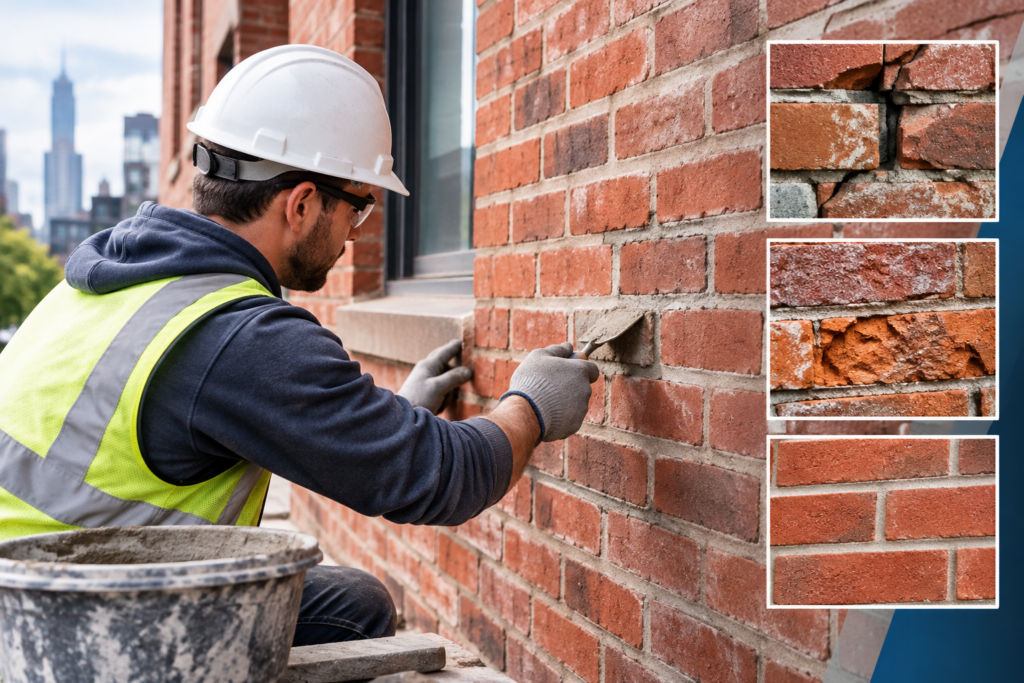
Brick buildings are a familiar part of New York City’s neighborhoods. They can provide strength, durability, and character for decades, but brickwork is not immune to damage. Exposure to rain, snow, freezing temperatures, humidity, pollution, and everyday wear can gradually affect masonry surfaces.
Small signs of damage may seem harmless at first, but problems such as cracks, loose bricks, or deteriorating mortar can become more serious if they are ignored. Timely Brick Repair Services can help property owners address these issues before they lead to larger repairs, water infiltration, or safety concerns.
For building owners and property managers in New York City, understanding common brick problems is an important part of responsible property maintenance.
Why Brickwork Can Become Damaged
Brick is a durable building material, but the entire masonry system depends on more than the bricks themselves. Mortar joints, flashing, sealants, drainage, and surrounding construction all play a role in protecting a wall. NYC buildings are exposed to changing weather throughout the year. Repeated moisture exposure, temperature changes, freeze-thaw cycles, and urban pollution can gradually weaken masonry components.
Age is another important factor. Older buildings may have deteriorated mortar, previous repairs, or materials that require specialized restoration techniques. Regular inspections can help identify developing problems before they become extensive.
1. Cracked Bricks
Cracks are one of the most visible signs that brickwork may need attention. Some cracks are minor, while others can indicate movement, moisture damage, or stress within the wall. Cracks may appear vertically, horizontally, or diagonally. Their location, size, pattern, and progression can help professionals understand the underlying issue.
Simply filling a visible crack may not solve the problem if the cause is related to structural movement or water penetration. A professional assessment can help determine whether the brick needs repair, replacement, or further investigation.
2. Spalling and Flaking Bricks
Spalling occurs when the face or surface of a brick begins to break away. You may notice flakes, chips, or sections of brick separating from the wall. Moisture is often a contributing factor. Water can enter porous masonry and, in cold weather, freeze and expand. Repeated freeze-thaw cycles can place pressure inside the material and eventually cause deterioration.
Spalling should not be ignored, particularly when damaged material is located above sidewalks, entrances, or other areas where people may be present. Professional Brick Repair Services can help identify the extent of deterioration and determine the appropriate repair approach.
3. Deteriorated Mortar Joints
Bricks depend on mortar joints to form a stable masonry wall. Over time, mortar can become weak, cracked, recessed, or washed away by moisture. When mortar joints deteriorate, water can find pathways into the wall assembly. Continued moisture exposure may contribute to further masonry damage.
Repointing, which involves removing deteriorated mortar and installing suitable new mortar, is a common masonry maintenance technique. However, the replacement mortar needs to be compatible with the existing brickwork. Using an inappropriate material can sometimes create additional problems.
4. Loose or Missing Bricks
Bricks can become loose because of deteriorated mortar, water intrusion, movement, impact, or long-term weather exposure. In some cases, individual bricks may become displaced or fall out completely. Loose masonry deserves prompt attention. A professional can evaluate the surrounding area, identify why the brick became unstable, and determine whether it can be repaired or needs replacement.
Replacing a damaged brick is not simply a matter of putting a new brick into the wall. The replacement should match the existing masonry as closely as practical in size, appearance, strength, and compatibility.
5. Water Damage and Moisture Intrusion
Water is one of the most common causes of masonry deterioration. Damaged mortar, open joints, failed sealants, cracks, and other defects can allow moisture to enter areas where it should not.
Signs of moisture-related brick problems may include staining, efflorescence, deteriorated mortar, peeling surfaces, damp areas, and recurring damage after rainfall.
Addressing the visible symptom without identifying the source of water can result in repeated repairs. Professional masonry specialists can investigate the affected area and recommend repairs that address the underlying problem.
6. Efflorescence
White or light-colored deposits appearing on brick surfaces are often known as efflorescence. They occur when water moves through masonry and carries soluble salts toward the surface. Efflorescence does not always mean that the brick itself has failed, but it can indicate that moisture is moving through the wall.
If deposits repeatedly return, property owners should investigate the source of moisture rather than simply cleaning the surface. Identifying and controlling water entry can help reduce recurring masonry problems.
7. Damaged or Failed Sealants
Sealants are used in various areas of a building to help control water and movement. Over time, sealants can become brittle, cracked, separated, or deteriorated. Failed sealant joints around windows, doors, expansion joints, and other transitions can allow water to reach surrounding masonry.
During a professional evaluation, these areas should be considered alongside the brickwork itself. Effective maintenance often requires looking at the complete building envelope rather than treating individual defects in isolation.
8. Brick Discoloration and Surface Deterioration
Changes in brick color can result from weather exposure, pollution, biological growth, staining, moisture, previous cleaning, or incompatible repair materials. Aggressive cleaning methods can sometimes damage masonry rather than improve it. Brick is a durable material, but improper cleaning can remove the outer surface or cause unnecessary deterioration.
Before cleaning or restoring brickwork, it is important to understand the material and the source of the staining. A professional approach can help protect the existing masonry while improving its appearance.
9. Bulging or Bowed Brick Walls
A wall that appears to bow, bulge, or lean should receive professional attention. These conditions can be associated with movement, deteriorated connections, moisture-related damage, or other building issues. A bulging wall is different from a simple surface crack. It may require a more detailed evaluation to understand the cause and determine the appropriate corrective work.
Property owners should avoid attempting to straighten or stabilize significantly displaced masonry without professional guidance.
10. Previous Improper Repairs
Not every masonry problem is caused by age or weather. Previous repairs can sometimes contribute to deterioration when incompatible materials or techniques were used. For example, mortar that is significantly harder than the surrounding historic brick can behave differently as the wall expands, contracts, and absorbs moisture. Similarly, poorly matched replacement bricks can affect both appearance and performance.
When repairing older NYC buildings, understanding the existing masonry system is especially important. A repair should aim to restore the wall while respecting the characteristics of the original construction.
When Should You Consider Brick Repair Services?
Not every small masonry defect requires immediate major work, but visible changes should not automatically be dismissed.
Consider arranging a professional evaluation if you notice:
- Cracked or broken bricks
- Loose or missing bricks
- Deteriorated mortar
- Spalling or flaking surfaces
- Repeated water stains
- White deposits on masonry
- Bulging or displaced brickwork
- Damaged sealants around openings
- Recurring masonry deterioration
- Brick damage near entrances or pedestrian areas
Early evaluation can make it easier to understand the condition of the masonry and plan appropriate maintenance.
Why Professional Brick Repair Matters for NYC Properties
New York City buildings face demanding environmental conditions and, in many areas, dense pedestrian activity. Masonry defects can affect more than appearance. Water intrusion can contribute to continued deterioration, while loose materials can create potential safety concerns. Professional Brick Repair Services can help property owners address damaged masonry using an approach suited to the building’s condition.
A proper repair typically begins with an assessment of the affected area. Depending on the problem, the work may involve brick replacement, mortar repointing, crack repair, sealant replacement, or other masonry restoration measures. The goal is not simply to make damaged brickwork look better. The repair should also help protect the surrounding masonry and reduce the likelihood of recurring problems.
How Reliance Group NYC Can Help
Reliance Group NYC provides professional building and masonry services for property owners who need help addressing brickwork deterioration. Our approach focuses on identifying visible masonry problems and understanding the conditions contributing to them. Whether a property has cracked bricks, deteriorated mortar, moisture-related damage, or other masonry concerns, a professional evaluation can help determine the appropriate next steps.
For NYC property owners, timely maintenance can be a practical way to protect the condition, appearance, and long-term performance of a building.
Final Thoughts
Brickwork can last for generations, but it still requires regular attention. Cracks, spalling, deteriorated mortar, loose bricks, moisture intrusion, and other defects can become more difficult and expensive to address when they are left unattended. Recognizing early warning signs is the first step. Professional Brick Repair Services can then help determine the cause of the problem and identify suitable repair solutions.
For property owners in New York City, maintaining brickwork is not only about preserving the appearance of a building. It is also about protecting the masonry from continued deterioration and keeping the property in good condition for years to come.