
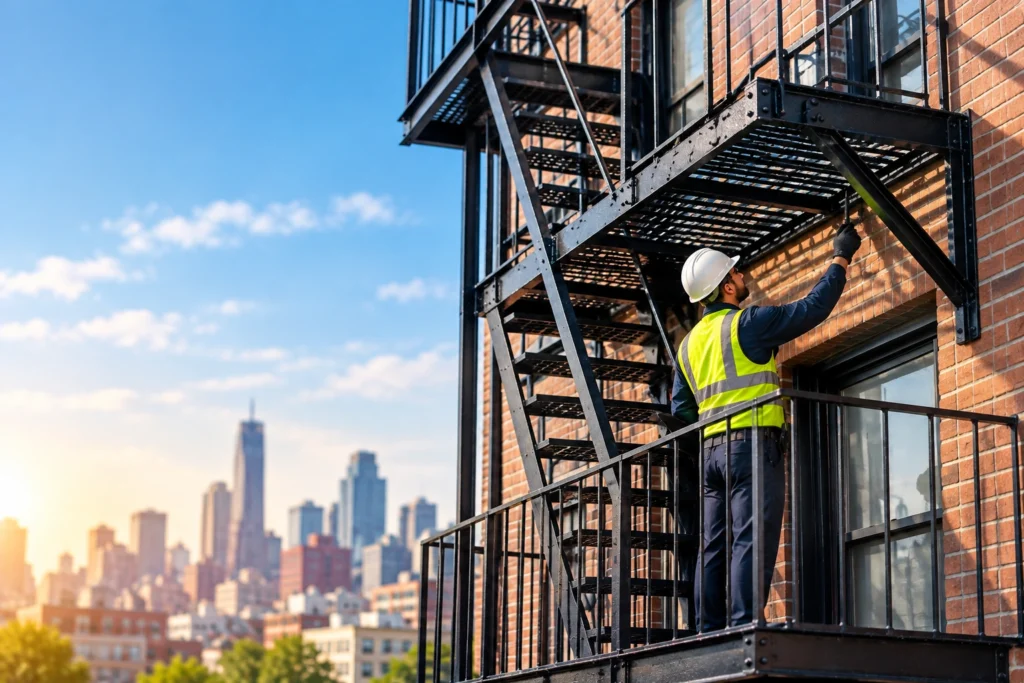
Fire escapes are an important part of emergency egress for many older buildings in New York City. Because they remain exposed to rain, snow, moisture, temperature changes, and other outdoor conditions, regular maintenance is essential for keeping them safe and functional.
For NYC building owners, fire escape maintenance should not be treated as an occasional repair task. Owners are responsible for maintaining their buildings and required means of egress in a safe and code-compliant condition. NYC fire-safety rules also require required means of egress to remain free from obstructions and available for immediate use during an emergency.
A regular maintenance checklist can help property owners identify problems early, arrange necessary repairs, and reduce the risk of serious deterioration.
Why Is Fire Escape Maintenance Important?
A fire escape may remain unused for long periods, but that does not mean it can be neglected. Continuous exposure to weather can cause metal components to deteriorate over time.
Rust, loose connections, damaged railings, weakened stairs, and other structural problems can affect the safety of a fire escape. Regular inspections and maintenance help identify these issues before they become more difficult or expensive to address.
Proper maintenance also helps building owners keep emergency exit routes accessible. NYC Fire Code provisions require means of egress to be maintained without obstructions or impediments and require relevant door hardware and other components to remain in good working order.
Key Fire Escape Maintenance Checks for NYC Buildings
Building owners can use the following checklist as a general maintenance guide. The actual inspection and repair requirements can vary depending on the building, fire escape, applicable code provisions, and the work being performed.
1. Check for Rust and Corrosion
Rust is one of the most common concerns for exterior metal fire escapes. Water and moisture can gradually corrode steel components, particularly where protective coatings have deteriorated.
During maintenance, look for:
- Surface rust and advanced corrosion
- Rust around connections and fasteners
- Corroded stair treads
- Deterioration around railings
- Rust at wall attachment points
- Areas where protective coatings have failed
Minor surface corrosion may require cleaning and protective treatment, while significant deterioration may require professional repair or replacement of affected components.
2. Inspect Stairs and Landings
Stairs and landings should be checked for visible deterioration and damage. A damaged tread or weakened landing can create a serious safety concern during an emergency.
A maintenance review should consider:
- Stair treads
- Landings
- Risers and supporting members
- Connections between sections
- Signs of bending or deformation
- Excessive corrosion
- Loose or damaged components
Current NYC Building Code provisions for fire escapes include requirements addressing stair dimensions, landings, handrails, guards, construction, access, and other features. Existing fire escapes are permitted to remain where they are properly maintained in a safe and code-compliant condition.
3. Examine Railings, Guards, and Handrails
Railings and guards provide important protection for people using a fire escape. Loose, damaged, or heavily corroded components should not be ignored.
Check for:
- Loose handrails
- Damaged guards
- Missing components
- Broken connections
- Excessive movement
- Corrosion at attachment points
Repairs should be completed by qualified professionals who understand the applicable NYC requirements.
4. Inspect Wall Connections and Fasteners
A fire escape depends on secure connections to the building and between its structural components. Deteriorated bolts, anchors, brackets, or other connections can affect the stability of the structure.
Look for signs such as:
- Loose bolts
- Missing fasteners
- Cracked or deteriorated connection areas
- Corrosion around anchors
- Movement in structural connections
- Damaged brackets
These areas can be difficult to evaluate properly from the ground, so a professional inspection may be necessary when there are concerns about structural condition.
5. Keep Access Clear
A fire escape cannot serve its intended purpose if access to it is blocked.
Building owners should make sure that:
- Windows and doors providing access can be used as intended
- Furniture or stored items do not block access
- Debris is removed
- Snow and ice are not allowed to create hazardous conditions
- Tenants do not use the fire escape for storage
NYC Fire Code provisions require required means of egress to remain free from obstructions and impediments to immediate use during a fire or other emergency.
6. Check for Water and Drainage Problems
Standing water can accelerate corrosion and contribute to deterioration. During maintenance, examine areas where water may collect or where drainage may be inadequate.
Property owners should pay particular attention after periods of heavy rain, snow, or freezing temperatures. If water repeatedly accumulates on a fire escape, the underlying drainage or structural condition should be evaluated.
7. Review Protective Coatings and Paint
Paint and protective coatings help protect metal surfaces from environmental exposure. Peeling, cracking, or missing coatings can leave metal vulnerable to moisture and corrosion.
Maintenance may include:
- Removing loose or deteriorated coatings
- Preparing affected metal surfaces
- Treating appropriate areas
- Applying suitable protective coatings
- Monitoring previously repaired areas
The correct preparation and coating system should be selected according to the condition and material of the fire escape.
8. Look for Structural Deterioration
Not every fire escape problem is immediately visible from a distance. Building owners should take signs of structural deterioration seriously.
Warning signs can include:
- Significant rust
- Cracked or damaged components
- Bent structural members
- Loose connections
- Unusual movement
- Damaged stairs or landings
- Deteriorated wall attachments
If a fire escape appears unsafe, property owners should arrange an evaluation by an appropriately qualified professional rather than relying only on a visual check from the ground.
How Often Should Fire Escapes Be Maintained?
There is no single maintenance schedule that can safely be applied to every NYC fire escape. The appropriate frequency depends on the condition of the structure, its exposure to weather, building characteristics, previous repairs, and applicable code requirements. Instead of waiting until visible damage becomes severe, building owners should include fire escapes in their property’s ongoing maintenance program.
Regular visual checks can help identify obvious problems, while qualified professionals can perform more detailed evaluations when needed.
What are Common Signs a Fire Escape Needs Repair?
Property owners should pay attention to changes in the appearance or condition of a fire escape.
Common warning signs include:
- Heavy rust or corrosion
- Loose railings
- Damaged stairs
- Deteriorated landings
- Loose bolts or connections
- Cracked or damaged attachment areas
- Missing components
- Peeling protective coatings
- Standing water
- Unusual movement or instability
If any of these conditions are present, professional assessment can help determine whether maintenance, repair, or more extensive work is appropriate.
Why Professional Fire Escape Maintenance Matters
Fire escape work involves more than cleaning and applying a fresh coat of paint. Structural components, connections, materials, access points, and applicable NYC requirements may all need to be considered. The NYC Fire Department states that building owners are responsible for the safe maintenance of their buildings and keeping them up to code, and FDNY conducts inspections to enforce applicable codes, laws, and regulations.
For this reason, property owners should work with experienced professionals when a fire escape requires inspection, repair, structural work, or other specialized maintenance.
How Reliance Group NYC Can Help
Reliance Group NYC provides building-related contracting and restoration services for property owners and managers throughout New York City. Professional attention to exterior building components can help identify deterioration and address maintenance needs before problems become more extensive. When fire escape work is required, a professional team can assess the existing condition, identify visible areas of concern, and recommend appropriate repair or maintenance solutions based on the property’s needs.
Property owners should also verify current NYC requirements and determine whether permits, filings, inspections, or professional design services are required for the specific scope of work.
Final Thoughts
Regular fire escape maintenance is an important part of responsible building ownership in NYC. Checking for corrosion, inspecting stairs and landings, maintaining railings, protecting metal surfaces, keeping access clear, and addressing structural concerns early can help keep fire escapes in usable condition.
Because NYC buildings are subject to specific building and fire-safety requirements, maintenance should be approached carefully and professionally. When deterioration or structural concerns are identified, qualified professionals can help determine the appropriate next steps.
For NYC property owners, treating fire escape maintenance as part of an ongoing building maintenance plan can help protect the property, its occupants, and its emergency egress systems.
Frequently Asked Questions
1. What does fire escape maintenance include?
Fire escape maintenance can include checking for rust and corrosion, inspecting stairs and landings, examining railings and connections, maintaining protective coatings, removing obstructions, and addressing visible deterioration.
2. How often should fire escapes be inspected?
The appropriate inspection frequency depends on the building, the fire escape’s condition, exposure to weather, previous repairs, and applicable NYC requirements. Regular monitoring can help identify maintenance problems early.
3. What are common fire escape problems in NYC?
Common problems include rust, corrosion, damaged stair treads, loose railings, deteriorated connections, peeling coatings, standing water, and structural deterioration.
4. Can rust on a fire escape be repaired?
Minor surface rust may be addressed through appropriate cleaning, surface preparation, corrosion treatment, and protective coating. Heavily corroded metal may require more extensive professional repair or replacement.
5. Who is responsible for maintaining a fire escape?
Building owners generally have responsibility for maintaining their properties and required safety features in a safe and code-compliant condition. Specific obligations can depend on the building and applicable NYC requirements.