
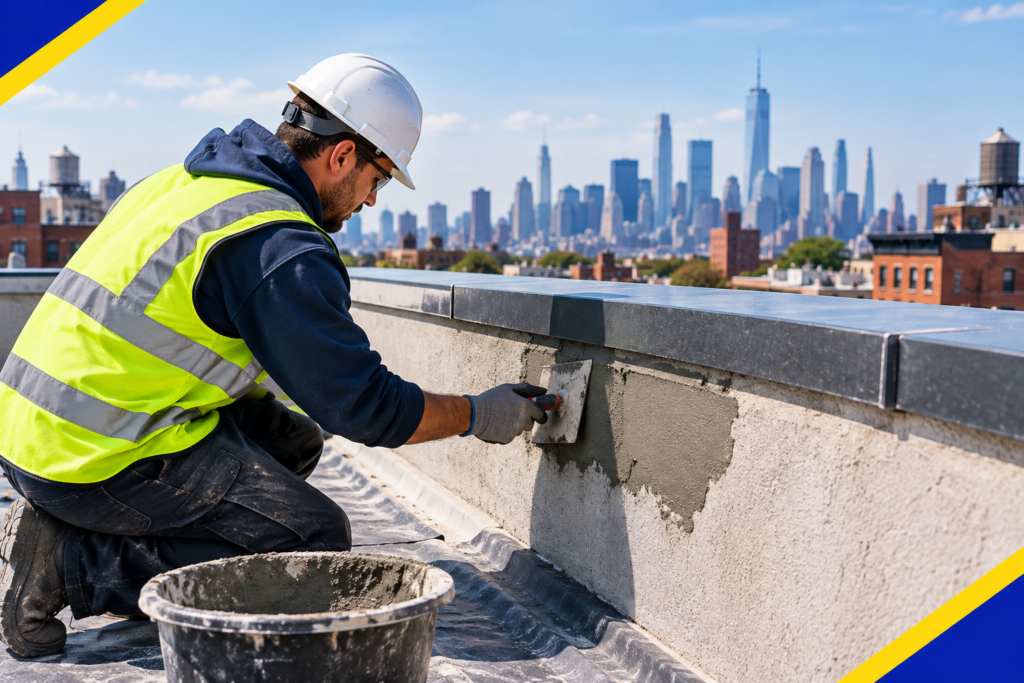
A parapet wall may look like a simple part of a building, but it has an important job. It sits along the edge of a roof and is exposed to almost everything the weather brings. In New York City, that means heavy rain, snow, freezing temperatures, strong winds, and long periods of summer heat.
Over the years, these conditions can take a toll on brickwork and mortar. A few small cracks may turn into larger openings, loose bricks can develop, and water may find its way into places where it should not be.
This is where Parapet Wall Repair NYC becomes important. Taking care of damage early can help protect the building exterior, reduce moisture problems, and prevent minor masonry issues from becoming more complicated repairs.
What Does a Parapet Wall Do?
A parapet is the portion of a wall that extends above the roofline. You can find parapets on many residential, commercial, and multi-story buildings throughout NYC. Besides creating a protective edge around the roof, a properly maintained parapet can help control water around the roof perimeter. It can also contribute to the appearance and construction of the building.
Because the wall is exposed and located at a higher level, it receives constant exposure to wind and precipitation. Even well-built masonry can deteriorate when it is not maintained over many years.
Why Weather Can Be Hard on Parapet Walls
Weather damage usually does not happen overnight. Instead, it often develops gradually. Rain can enter through damaged mortar joints or small openings in masonry. When temperatures drop, that moisture can freeze. Frozen water expands, putting pressure on surrounding materials. When temperatures rise again, the ice melts and leaves the masonry exposed to another cycle.
After many cycles, mortar may become weak and bricks may crack or loosen. Summer weather presents a different challenge. High temperatures can cause building materials to expand, while cooler temperatures cause them to contract. Repeated movement can contribute to deterioration when a wall already has weaknesses. Wind and storms can add another layer of stress, especially when sections of masonry are already damaged.
Signs That a Parapet Wall May Need Repair
Not every damaged parapet looks serious from the street. Some problems begin in small areas and become noticeable only after the damage has progressed.
Property owners should watch for signs such as:
Cracked Bricks
Cracks running through individual bricks may indicate that the masonry has been affected by moisture, movement, impact, or age. Severely damaged bricks may eventually need replacement.
Deteriorated Mortar
Mortar joints can become soft, cracked, or recessed over time. When mortar loses its ability to protect the joints, water can enter more easily.
Loose Masonry
Loose or displaced bricks deserve immediate attention. They can indicate that part of the wall has weakened and may create a safety concern.
Water Staining
Water marks around the upper floors, roof area, or interior ceilings can sometimes point to moisture entering through the parapet or nearby roof components.
Damaged Coping
The top of a parapet is often protected with coping. If coping is cracked, loose, or poorly sealed, water may reach the masonry beneath it.
How Water Can Damage a Parapet
Water is one of the biggest concerns when maintaining exterior masonry. A healthy parapet should direct water away from vulnerable areas. Once cracks, open mortar joints, or damaged coping create entry points, moisture can get inside the wall. The problem becomes more serious during NYC winters. Water trapped inside masonry can freeze and expand. Repeated freezing and thawing can gradually cause bricks to crack and mortar joints to deteriorate.
Moisture can also move beyond the exterior wall and contribute to interior staining or other building problems. For this reason, repairing the visible damage alone may not always be enough. The source of the moisture should also be considered.
When Should Parapet Wall Repairs Be Considered?
There is no single repair schedule that applies to every building. The right timing depends on the age of the property, construction materials, exposure to weather, and current condition of the parapet. However, repairs should not be postponed when there are visible signs of deterioration.
A small area of damaged mortar may require relatively straightforward maintenance. If the same problem is left untreated for years, surrounding bricks may also become damaged. Early attention gives property owners an opportunity to understand the problem and address it before more extensive deterioration develops.
Common Repairs for Damaged Parapets
The repair approach depends on what an inspection finds.
Repointing Mortar Joints
When mortar has deteriorated but the surrounding bricks remain in good condition, repointing may be appropriate. The damaged mortar is carefully removed and replaced with suitable new material.
Replacing Damaged Bricks
Bricks that are badly cracked, broken, or deteriorated may need to be replaced. New materials should be selected carefully to work with the existing masonry.
Repairing Cracks
Some cracks can be repaired once their cause has been identified. The repair method depends on the location, size, and nature of the crack.
Repairing or Replacing Coping
Damaged coping can allow water to enter the wall. Repairing or replacing affected sections can help improve protection at the top of the parapet.
Addressing Water Intrusion
If moisture is the underlying problem, repairs may need to include measures that improve drainage and reduce water entry rather than simply covering the visible damage.
Why an Inspection Matters
Looking at a parapet from the sidewalk does not always tell the complete story. Some defects may be hidden, while other problems may only become visible from the roof or upper levels. A professional inspection can help identify the condition of the masonry and determine whether the problem is limited to one area or extends across a larger section.
An inspection can also help connect parapet problems with nearby roof, flashing, coping, or drainage issues. Understanding the cause is important because repairing only the visible symptom may not prevent the problem from returning.
How Property Owners Can Reduce Parapet Problems
Good maintenance does not have to be complicated. The key is to pay attention to changes and deal with problems before they grow.
Property owners can:
- Check parapet masonry regularly
- Look for new cracks or loose bricks
- Keep an eye on deteriorating mortar
- Inspect coping for visible damage
- Watch for signs of water entering the building
- Address masonry problems promptly
- Have difficult-to-access areas professionally inspected
- Keep roof drainage systems maintained
These simple steps can help property owners stay aware of the building’s condition.
Why NYC Buildings Need Extra Attention
New York City buildings experience a wide range of weather throughout the year. A parapet may face freezing winter temperatures, spring rain, humid summer conditions, and strong storms within the same year. Older masonry buildings can be particularly vulnerable because their exterior materials have already experienced years of exposure.
This does not mean every older parapet requires major reconstruction. It does mean that regular observation and proper maintenance can be valuable for identifying deterioration early.
Choosing a Parapet Wall Repair Contractor
Parapet repairs should be handled by professionals who understand masonry construction and exterior building conditions.
When choosing a contractor, property owners should consider the company’s experience with masonry repairs, ability to identify the source of damage, and approach to building maintenance.
A contractor should also explain the condition of the parapet clearly and outline the recommended repair work instead of simply treating the most visible problem.
Reliance Group NYC provides building-related services for properties throughout New York City. Its team can help property owners evaluate exterior building concerns and determine what type of repair or maintenance may be appropriate.
Frequently Asked Questions
What is parapet wall repair?
Parapet wall repair involves fixing damaged sections of a wall located above the roofline. Depending on the condition, repairs may include brick replacement, mortar repointing, crack repair, coping repair, and measures to address water intrusion.
What are the most common causes of parapet wall damage?
Common causes include prolonged exposure to rain and snow, freezing and thawing cycles, strong winds, moisture intrusion, deteriorated mortar, damaged coping, building movement, and general aging.
How can I tell if my parapet wall needs repair?
Look for cracked or loose bricks, deteriorated mortar joints, visible cracks, damaged coping, water stains, or signs of moisture around the upper levels of the building. A professional inspection can provide a more complete assessment.
Can water damage a parapet wall?
Yes. Water can enter through cracks, deteriorated mortar joints, damaged coping, and other openings. Once moisture gets into masonry, repeated freezing and thawing can contribute to further deterioration.
How often should parapet walls be inspected?
The appropriate inspection frequency depends on the building’s age, construction, condition, and exposure to weather. Regular visual checks are useful, while professional inspections may be appropriate when deterioration or water intrusion is suspected.
Can damaged bricks in a parapet wall be replaced?
Yes. Severely damaged or deteriorated bricks can often be removed and replaced with compatible materials. The surrounding masonry should also be checked to determine whether additional repairs are necessary.
Is parapet wall repair only needed for older buildings?
No. Older buildings may have more accumulated deterioration, but newer buildings can also develop parapet problems because of construction defects, weather exposure, water intrusion, or physical damage.
Why is professional parapet wall repair important in NYC?
Parapet walls are exposed to changing weather conditions and can be difficult to inspect safely from ground level. Professional repair can help identify the underlying cause of damage and determine the appropriate repair approach.
Final Thoughts
Parapet walls are exposed to NYC weather throughout the year, making them vulnerable to gradual deterioration. Rain, snow, freezing temperatures, heat, and wind can all contribute to cracks, weakened mortar, damaged bricks, and water intrusion.
The good news is that many parapet problems can be identified before they become major building issues. Regular inspections, proper maintenance, and timely Parapet Wall Repair NYC can help protect the exterior of a property and reduce the risk of more extensive deterioration.
For building owners, the most practical approach is to pay attention to early warning signs and have questionable areas evaluated by an experienced professional. A well-maintained parapet is an important part of keeping the entire building protected for years to come.