
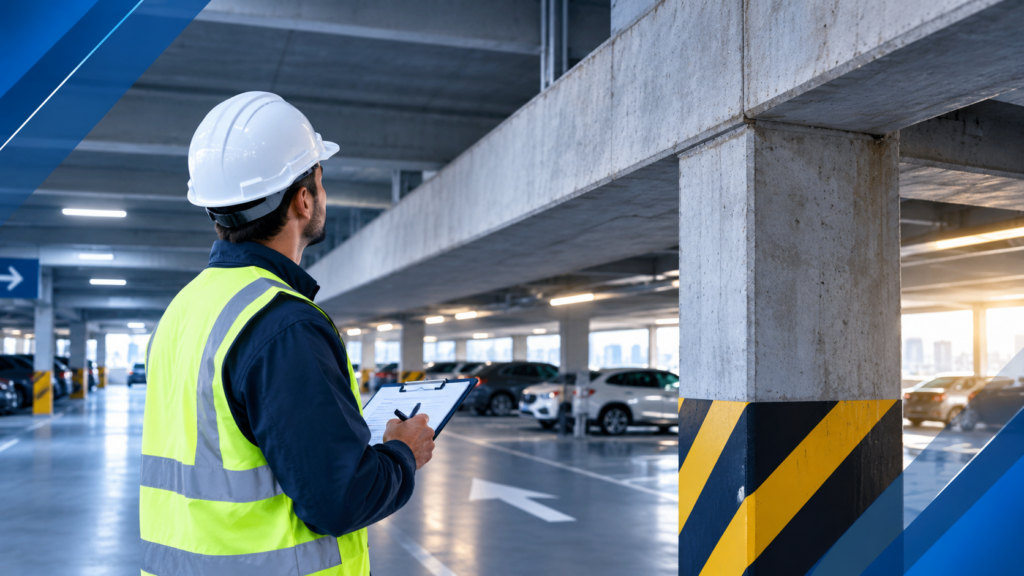
Parking structures deal with heavy vehicle traffic, constant movement, moisture, temperature changes, and everyday wear. Over time, these conditions can affect concrete surfaces, structural components, drainage systems, expansion joints, and other parts of the facility. What may begin as a small crack or water stain can eventually develop into a more serious problem if it is not addressed.
A professional Parking Structure Inspection helps identify these issues early and gives property owners a clearer understanding of the building’s condition. At Reliance Group NYC, inspections can help property owners recognize signs of deterioration, understand potential concerns, and plan appropriate maintenance or restoration work.
Why Parking Structure Inspections Matter
A parking garage is more than an area for storing vehicles. It is a structure that must safely handle repeated loads and environmental exposure. Every day, vehicles place stress on decks, ramps, columns, beams, and other components.
Moisture can make these conditions more challenging. Water entering through cracks or damaged waterproofing can reach reinforcing steel and contribute to corrosion. Over time, this may lead to concrete deterioration and other structural concerns. Regular inspections help identify these conditions before they become more extensive.
What Does a Parking Structure Inspection Include?
The inspection process depends on the age, design, accessibility, and condition of the parking structure. A professional evaluation may involve examining accessible structural and architectural components for visible signs of deterioration.
Common areas reviewed during an inspection include:
- Concrete slabs and parking decks
- Columns and beams
- Ramps and driving surfaces
- Structural walls
- Expansion and construction joints
- Drainage systems
- Waterproofing conditions
- Reinforcing steel
- Areas affected by moisture
- Concrete surfaces showing cracks or deterioration
The purpose is to understand where problems exist and determine whether they require repair, monitoring, or additional investigation.
Common Problems Found During Parking Structure Inspections
Several issues can develop in parking garages as they age. Some are easy to notice, while others may require closer professional evaluation.
Concrete Cracks
Cracks are common in concrete structures, but their appearance and location can provide important information. Some cracks may result from shrinkage or normal movement, while others can be associated with moisture, corrosion, settlement, or structural stress.
During an inspection, cracks can be evaluated based on their size, location, pattern, and surrounding conditions.
Concrete Spalling
Spalling occurs when pieces of concrete break away from a surface. It can expose reinforcing steel and allow moisture to reach areas that should remain protected.
If spalling continues to develop, the affected area may become larger and require more extensive repair. Early identification allows property owners to address the deterioration before it progresses further.
Reinforcing Steel Corrosion
Reinforcing steel provides strength within concrete structures. When moisture and contaminants reach the reinforcement, corrosion can occur.
Corroding steel can expand and place pressure on the surrounding concrete. This may result in cracking, staining, or spalling. Identifying these warning signs is an important part of evaluating the condition of a parking structure.
Water Infiltration
Water is one of the most common concerns for parking facilities. Leaks may occur through cracks, deteriorated joints, damaged waterproofing systems, or drainage problems.
Continued water exposure can contribute to concrete deterioration and corrosion. During an inspection, areas showing moisture damage can be evaluated to help determine where the problem may be coming from.
Damaged Expansion Joints
Expansion joints allow certain structural components to accommodate movement caused by temperature changes and other conditions. When joints become damaged or deteriorated, water can enter areas that should remain protected.
Inspecting these joints can help identify deterioration and determine whether maintenance or replacement may be required.
Drainage Issues
Effective drainage is essential for keeping water from remaining on parking decks and ramps. Blocked drains, damaged drainage components, and poor water flow can contribute to long-term moisture problems. A professional inspection can identify areas where drainage performance may need attention.
How Reliance Group NYC Approaches Structural Evaluation
At Reliance Group NYC, the inspection process is focused on identifying visible signs of deterioration and understanding the condition of important parking structure components. Rather than looking at a single defect in isolation, an evaluation considers the surrounding conditions. For example, a crack may be examined alongside nearby staining, corrosion, spalling, drainage problems, or signs of water infiltration.
This broader approach can help property owners understand potential causes and make better-informed decisions about maintenance and restoration.
Warning Signs That Should Not Be Ignored
Property owners and facility managers should pay attention to changes in their parking structures. Visible warning signs can sometimes indicate that a professional evaluation is needed.
Some common signs include:
- New or widening concrete cracks
- Pieces of concrete breaking away
- Rust-colored stains
- Exposed reinforcing steel
- Repeated water leaks
- Standing water
- Damaged expansion joints
- Deteriorating ramps
- Unusual surface damage
- Recurring problems in previously repaired areas
Not every crack or stain means there is a major structural problem. However, professional evaluation can help determine the seriousness of the condition.
How Inspections Help With Parking Garage Restoration
An inspection is an important first step when planning parking garage restoration. Before repairs begin, property owners need to understand what has deteriorated and why.
Inspection findings can help identify areas that may require:
- Concrete repair
- Waterproofing improvements
- Joint repair or replacement
- Corrosion treatment
- Drainage improvements
- Surface restoration
- Additional structural evaluation
This information can help create a more targeted repair plan instead of addressing only the visible symptoms.
Benefits of Regular Parking Structure Inspections
Regular inspections provide several practical benefits for property owners and facility managers.
Early Problem Identification
Small defects can be identified before they have an opportunity to develop into larger areas of deterioration.
Better Maintenance Planning
Inspection findings can help property owners prioritize repairs and plan maintenance based on the actual condition of the structure.
Protection of the Property
Regular evaluation helps property owners stay informed about the condition of an important building asset.
Potentially Lower Repair Costs
Addressing deterioration at an earlier stage may reduce the need for more extensive restoration later.
Improved Long-Term Performance
Routine inspection and maintenance can help parking structures remain functional and better protected against ongoing environmental exposure.
When Should a Parking Structure Be Inspected?
There is no single inspection schedule that applies to every parking structure. The appropriate frequency depends on factors such as the building’s age, construction, usage, environmental exposure, maintenance history, and current condition. An inspection may also be appropriate when a property owner notices new cracks, leaks, corrosion, concrete deterioration, or other unusual conditions.
Parking facilities that have experienced recurring water problems or previous structural repairs may also benefit from closer monitoring.
Why Early Action Is Important
Structural deterioration generally does not improve on its own. A small defect may remain stable for some time, but continued exposure to moisture, vehicle loads, temperature changes, and other conditions can cause deterioration to progress.
That is why identifying problems early is an important part of responsible property maintenance. A timely inspection can provide useful information before a minor issue becomes a larger restoration project.
Frequently Asked Questions
1. What are the main components checked during a parking structure inspection?
A professional inspection may examine concrete slabs, beams, columns, ramps, expansion joints, drainage systems, waterproofing, reinforcing steel, and other accessible structural components for signs of deterioration.
2. How can moisture damage affect a parking structure?
Water can enter through cracks, failed joints, damaged waterproofing, or drainage problems. Continued moisture exposure can contribute to concrete deterioration, reinforcing steel corrosion, staining, and spalling.
3. What are the early warning signs of parking structure deterioration?
Common warning signs include widening cracks, rust stains, concrete spalling, exposed reinforcement, recurring leaks, standing water, damaged joints, and deterioration around ramps or parking decks.
4. How does a parking structure inspection help with repair planning?
Inspection findings help property owners understand the location and condition of damaged areas. This information can be used to prioritize repairs, determine whether further evaluation is needed, and develop a suitable maintenance or restoration plan.
5. Can regular inspections extend the life of a parking structure?
Regular inspections can help identify deterioration early and support timely maintenance. Addressing problems before they become extensive can help protect structural components and support the long-term performance of the facility.
Final Thoughts
A Parking Structure Inspection gives property owners an opportunity to understand the current condition of their parking facility and identify areas that may require attention. Cracks, spalling, corrosion, water infiltration, damaged joints, and drainage problems are among the conditions that should be monitored.
With professional evaluation and proper maintenance planning, property owners can take action based on the actual condition of the structure rather than waiting for visible deterioration to become severe.
Reliance Group NYC helps property owners evaluate building and structural conditions and plan appropriate solutions for maintaining their properties. Regular inspections can be an important part of protecting a parking structure and supporting its long-term performance.