
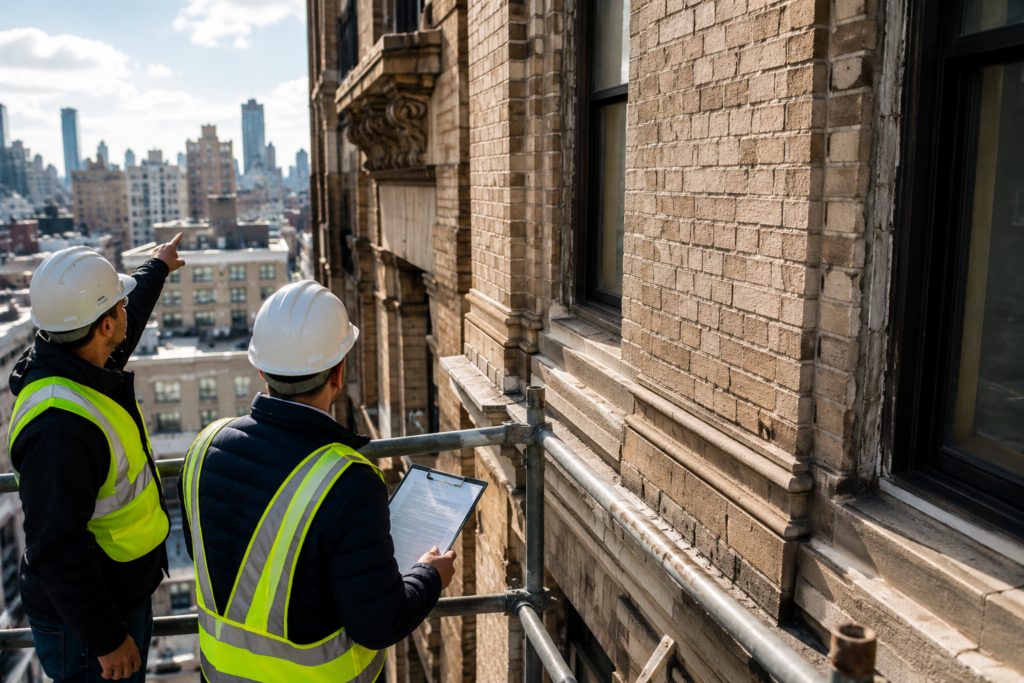
Owning a building in New York City comes with more than maintaining the interior and keeping tenants comfortable. Building owners are also responsible for maintaining exterior walls and ensuring that the property remains safe. For certain buildings, Local Law 11 plays an important role in preventing facade-related hazards.
If your property is subject to this requirement, working with experienced local law 11 contractors NYC can make the inspection and repair process much easier. Understanding what the law involves, when inspections are required, and what happens when problems are discovered can help building owners avoid unnecessary delays and costly issues.
What Is Local Law 11?
New York City’s Local Law 11, commonly known as the Facade Inspection & Safety Program (FISP), requires periodic inspections of the exterior walls and appurtenances of certain buildings. The program was established to help identify unsafe facade conditions before they become a danger to pedestrians, occupants, or surrounding property.
Generally, buildings that are more than six stories high fall within the scope of the facade inspection requirements. The exterior must be inspected by a qualified professional, and required reports must be filed with the city. For owners, the important point is simple: facade maintenance is not only about appearance. It is also an important part of building safety and regulatory compliance.
Why Local Law 11 Matters to Building Owners
Exterior walls are exposed to rain, snow, wind, temperature changes, pollution, and other environmental conditions throughout the year. Over time, these factors can contribute to deterioration.
Small problems can include:
- Cracked masonry
- Deteriorated mortar joints
- Loose bricks or stones
- Damaged lintels
- Corroded metal components
- Cracked or damaged parapets
- Failing sealants
- Water infiltration
If these conditions are ignored, they can become more serious and expensive to address. Local Law 11 inspections give building owners an opportunity to identify these problems and arrange appropriate repairs before they create a greater safety concern.
When Should You Hire Local Law 11 Contractors NYC?
Building owners should not wait until an inspection deadline is approaching to start looking for a contractor. Planning ahead can give you more time to obtain estimates, coordinate repairs, and address unexpected conditions.
You may need qualified contractors when:
- A facade inspection identifies unsafe or defective conditions.
- Repairs are recommended following a professional inspection.
- Masonry or exterior wall components have deteriorated.
- Water is entering through the building facade.
- Loose materials create a potential hazard.
- Your property needs facade maintenance before its next inspection cycle.
- Repairs must be completed as part of a Local Law 11 compliance process.
Starting early can also help prevent rushed decisions and scheduling problems.
What Does a Local Law 11 Contractor Do?
A contractor’s role can vary depending on the condition of the property and the scope of work recommended by the qualified facade professional. Typical repair work may include masonry restoration, brick replacement, repointing, lintel repairs, sealant replacement, waterproofing, and other exterior restoration work.
A contractor may also coordinate site access, scaffolding or other necessary equipment, material procurement, and repair activities. It is important to understand that the contractor and the inspecting professional do not necessarily perform the same role. The inspection and technical evaluation must be handled by the appropriate qualified professional, while contractors carry out the required construction or restoration work.
Common Facade Problems Found During Inspections
Facade inspections can uncover different types of deterioration. Some may be relatively minor, while others may require prompt attention.
Cracked Masonry
Cracks can develop because of weather exposure, building movement, aging materials, or other factors. Depending on their location and severity, they may require repair or replacement.
Deteriorated Mortar
Mortar joints can weaken over time. Repointing may be necessary to restore the joints and help prevent moisture from entering the wall assembly.
Loose or Damaged Bricks
Loose masonry can present a serious safety concern, particularly when the building is located next to a busy sidewalk or public area.
Damaged Lintels
Lintels support masonry above windows and doors. Corrosion or deterioration can affect their performance and may require repair or replacement.
Water Infiltration
Water entering through the facade can contribute to masonry deterioration and interior damage. Identifying the source of moisture is important before carrying out repairs.
How to Choose the Right Contractor
Selecting a contractor for facade work requires more consideration than simply choosing the lowest estimate. Exterior restoration can involve complex work, public safety considerations, and coordination with building professionals.
Before hiring a contractor, building owners should consider the following:
Experience With NYC Facade Work
Look for a company that understands the challenges of working on New York City buildings, particularly properties subject to facade inspection requirements.
Relevant Project Experience
Ask whether the contractor has handled projects involving masonry restoration, facade repairs, lintels, waterproofing, or similar exterior work.
Clear Estimates
A professional estimate should explain the proposed work and identify major costs. If the scope is unclear, ask questions before signing an agreement.
Safety Practices
Facade restoration may involve workers operating at significant heights and work taking place near pedestrians. Proper safety planning is essential.
Communication
Choose a contractor who communicates clearly about scheduling, site conditions, materials, and unexpected discoveries during the project.
Why Building Owners Should Not Ignore Facade Problems
A facade issue rarely becomes better simply because it is left alone. Weather and continued exposure can cause deterioration to progress.
For example, a small crack may allow water to enter the masonry system. Repeated freezing and thawing can contribute to further deterioration, while corrosion can cause surrounding materials to break apart.
Delaying necessary repairs can therefore result in a larger scope of work later. More importantly, facade problems can create risks for people around the building. Addressing defects promptly is an important responsibility for property owners.
What Happens After Problems Are Identified?
The next steps depend on the condition found during the inspection. A qualified facade professional may recommend repairs and identify areas that require attention. The building owner can then work with an appropriate contractor to complete the necessary work.
Depending on the circumstances, the process may involve:
- Reviewing the inspection findings.
- Understanding the recommended repairs.
- Obtaining contractor estimates.
- Planning access and safety measures.
- Completing the required restoration work.
- Documenting completed repairs.
- Coordinating any required follow-up inspection or filing.
Because each building is different, the exact process and required documentation can vary.
How Proper Maintenance Can Reduce Future Problems
Local Law 11 compliance should not be viewed as a once-every-few-years responsibility. Regular facade maintenance can help building owners identify deterioration earlier. Property managers should keep an eye on visible signs such as new cracks, damaged masonry, deteriorated joints, rust stains, water penetration, and damaged exterior components.
Routine maintenance can help extend the service life of facade materials and potentially reduce the size of future repair projects.
Questions Building Owners Should Ask Before Hiring a Contractor
Before moving forward with a facade contractor, consider asking:
- Have you completed similar NYC facade projects?
- What type of exterior repair experience do you have?
- Can you provide a detailed scope of work?
- What access equipment will the project require?
- How will pedestrian safety be managed?
- What happens if additional deterioration is discovered?
- How long is the estimated project timeline?
- What documentation will be provided after the work?
- How will the project be coordinated with the building’s facade professional?
Getting clear answers can help you compare contractors more effectively.
Why Professional Facade Repairs Are Worth the Investment
Facade restoration is an investment in the long-term condition of a building. Quality repairs can help protect exterior materials, reduce water-related deterioration, improve the appearance of the property, and address safety concerns. For owners of NYC buildings subject to facade inspection requirements, professional repair work can also help keep the property moving toward compliance when defects have been identified.
The goal should not simply be to complete the minimum amount of work. Instead, owners should look for durable repairs that address the underlying problem appropriately.
Final Thoughts
Local Law 11 is an important part of maintaining safe building facades in New York City. For building owners, understanding inspection requirements and addressing facade deterioration early can make the overall process more manageable.
If an inspection has identified problems at your property, experienced local law 11 contractors NYC can help carry out the necessary restoration and repair work. Choosing a contractor based on experience, safety practices, communication, and quality of work can help protect both your property and the people around it.
For Reliance Group NYC, the focus should always be on practical facade solutions, careful workmanship, and helping building owners address exterior repair needs with greater confidence.